The alignment of the Feet in Taijiquan is made effective when we are accounting for both sides of each Foot. Each Foot creates two lines, which are typically not parallel. Therefore, we must make an intentional decision about how to use each Foot in establishing the trajectory of a given Form or action.
The most common way of measuring aim or trajectory is by pointing the Big-Toe. The Mind naturally identifies with the interior, the medial aspect of the Foot. However, this generally leaves the outer edge of the Foot aimed eight, or potentially many more, degrees off the target.
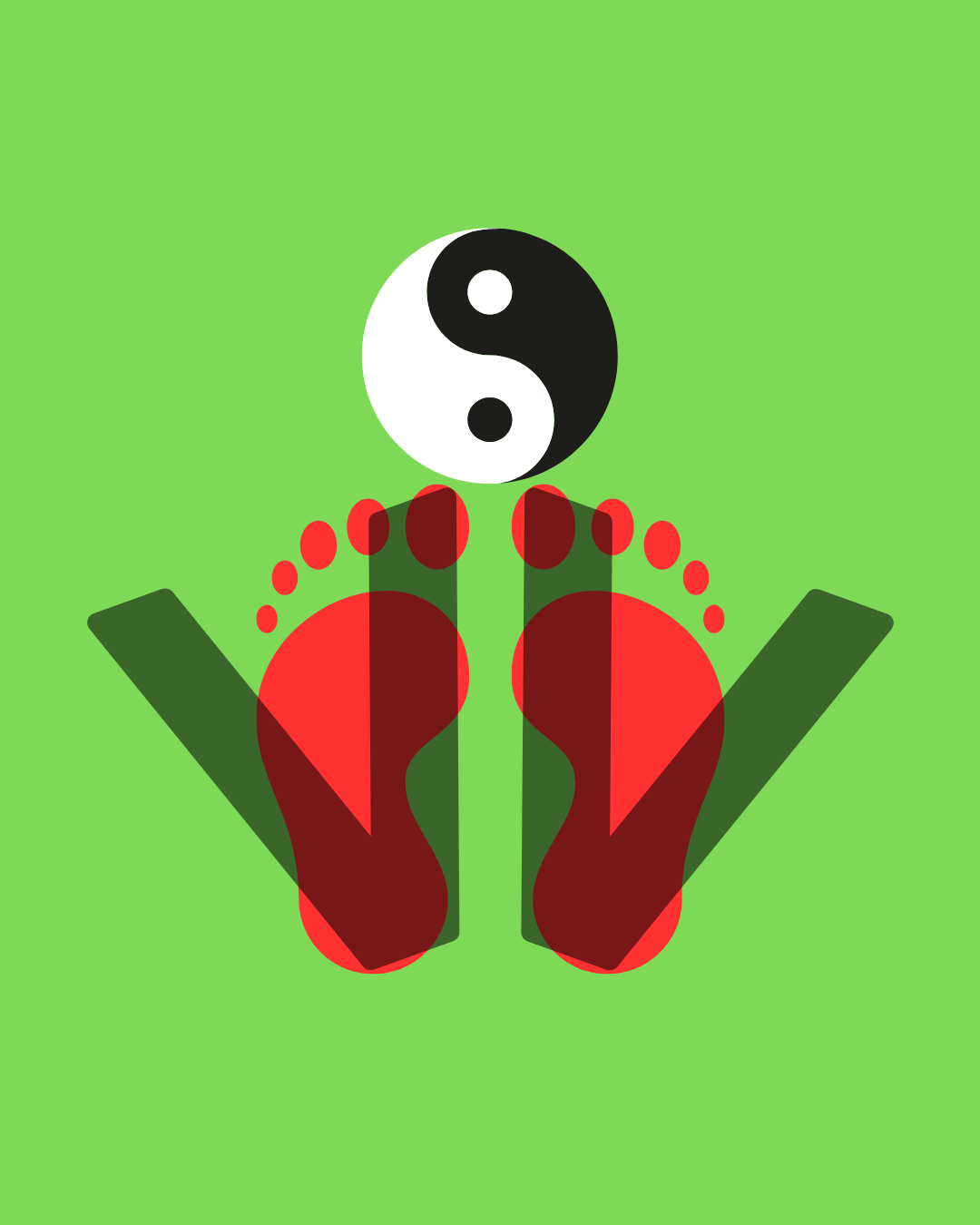
While the Big-Toe does still indeed hold the target, a substantial amount of energy and intent never has a chance to interact with the target. By adjusting the Foot, we can increase the amount of energy which is likely to interact with the target.

Allowing the outer-aspect of the Foot to set our aim promotes a higher likelihood that our energy is delivered to the intended target. Accounting for both edges of the Foot creates a dynamic of triangulating focus which sharpens over distance, rather than a dispersing focus which becomes vague over distance. Utilizing “two aims in one” channels and directs power whereas using a single line of aim is more likely to disperse and leak power.

 Yin-Yang-Yoga
Leave a comment