Author: chibotaichi

  • Walking to Wuji

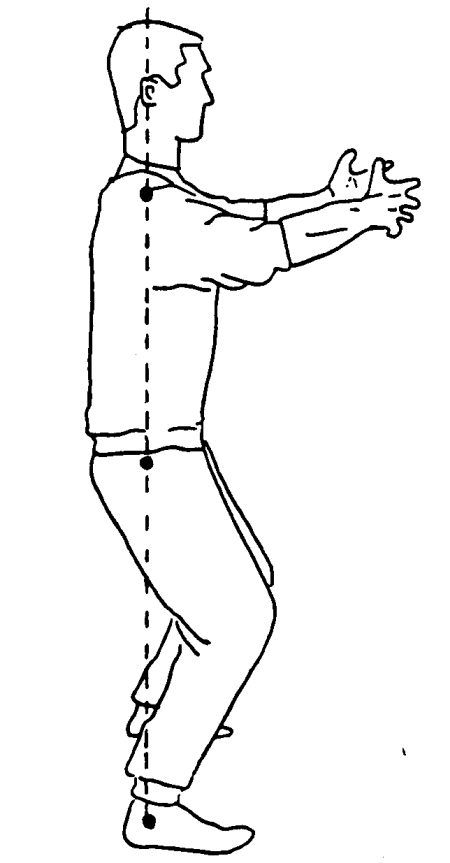
    The “Tai Chi Walking” exercise is well-known and widely-practiced.

    A walking meditation…

    It’s worth remembering that

    what we’re really practicing

    is a single Step.

    Many times.

    Returning

    to the steadfast

    wuji.

  • Yang Style Footwork Map

    gbtfeet

    The image above shows the foot positions for the right side of the Yang Style short form after the commencement, through the Grasp Bird’s Tail Sequence.

    We can see clearly that the footwork is generally quite simple, and only involves four unique positions. Also, we can see the consistent presence of a “channel” between the feet, ensuring that the feet do not become tangled.

  • Happy New Year!

    IMG_2261

    The (Lunar New Year) Chinese New Year celebration begins this week. Our current year of 2016 is the year of the Fire-Monkey.

    The term “Monkey Mind” is often used to explain our tendency toward overwhelming mental activity, or non-stop thinking (for good and for bad). A Monkey, however, does not mind!

    A Monkey-year is purported to often be a busy one, with much to see and do. Although Balance is still useful, and some of us may tend to require more rest, relaxation, and opportunities to escape the Monkey Mind, many of us may discover that the heightened buzz of activity is easily accommodated.

    Whatever the case may be for you this year, with the additional association of the Fire element, don’t be afraid to do what you do full-on. Surge forward toward goals, enjoy little things with great joy, and shake your tree branches from time to time!

  • Grasping the Bird’s Tail

      
    Think about it. Imagine it. 

    The faintest touch; fragility.

    Could you feel the wings fluttering through your fingertips? Could you feel the tiny but fervently beating heart?

    “Listening” is a skill. 

    Ting Jin is the term often used to suggest Listening in a physical/kinetic manner. 

    True skill in TaiChi depends, at least in part, on cultivating TingJin. When we can “hear” what is being “said” we can take correct action. 

    This is the purpose of Sensing-Hands or Tui Shou excercises. Not to develop our own action (the form exists for that) but to practice Listening, to utilize TingJin.

  • Meditation

    In meeting with several teachers and associates today, the topic of Meditation came up.

    Recently, Meditation has also been mentioned more often on SocialMedia and in other arenas of dialogue. Of course, this includes the voice of non-meditators, some of whom feel a sense of peer-pressure (if not the pressure of pure smugness and superiority) from the pro-Meditation crowd.

    Today’s conversations helped me appreciate the diverse possible approaches to Meditation. Certain systems of Meditation exist with specific instructions and time-tested methods. Some traditions and lineages of Yoga are examples of this, though Modernity has also spurred a large blurring of lines and borders between different traditions.

    In any case, if we were to avoid asking the adherents or advocates of a particular system or brand of Meditation, we would find that Meditation itself can be practiced and applied (or at the very least, conceived of) in many ways.

    There are Buddhist perspectives that suggest manual labor to be among the best of Meditations.

    Many Yoga classes invite us to use Savasana as a Meditation.

    TaiChi CHuan is often marketed as a “moving meditation”.

    These are all active attempts or efforts at Meditation;

    what of the inadvertent or unassuming Meditations?

    Riding a bicycle down a smooth road on a sunny day. Fishing a lazy stream in the late afternoon. Lounging, legs-up, on the sofa as gentle breezes whisper in the branches outside the window.

    Meditation might be more properly thought of as an Experience.

    Any Experience during which we are wholly (or transcendentally, to look at it from the other side of the coin) engaged, fully attuned, whether by way of keen mental-acuity, or that broader body-based proprioceptive perspective, being truly In-The-Moment is the bottom-line of Meditation.

    Surely an exception to the Rule might exist, but I believe Everybody pursues Meditation, whether they realize it or not.

    A Runner’s High. The first bite of a sumptuous meal. A job well-done.

    Meditation, in it’s truest form, is something that happens without our recognition more often than not.

    See if you can catch yourself meditating from time to time. The people who claim to not want anything to do with Meditation might find that they already DO meditate, and perhaps more often than many people who have bumper-stickers declaring their Practice.

    Meditation as a Practice in and of itself is certainly not Everybody’s cup of tea.

    Meditation as a general category of States-of-Being, however, is something inherent to the Human condition. It is simply a part of our Natural Experience.

  • Nurture Your Nature

    This is the principle I strive to convey in the class setting. 

    The Listening skill, being able to understand the Language of the Body, is the only way we can stay up to date with what we need in our Practice.

    The changing factors of our World impact us all in different ways. A hot summer day is the right time to play; fun in the sun, for some of us. Some of us find that a hot day is an indoor-holiday, or sends us looking for shade!

    The literal fact of the “Matter” of each individual Body suggests certain responses to various stimuli.

    Heat can feel refreshing and energizing to some, and oppressive and exhausting to others. 

    Likewise, it is, with the many manifestations of Asana Yoga. Let each session on the mat reflect what your Body is needing in that moment. 

    Cherry-pick the nine postures you truly need and use them to the fullest. Take Time to hone and stregnthen your Nature, but be sure to grow with Balance and Grace. 

    Take the Time to reveal your limits to yourself. Know where the line is without attatchment to the implications of what that means. It means nothing until you give it meaning. 

    If a pose happens, it happens. If it doesn’t, then it doesn’t. This instance has no bearing on tomorrow’s attempt until you define that influence. 

    Try it once more quick just in case, then try again tomorrow. Modify the pose and take a stepping-stone toward the pose if you want to make it happen.

    Or let go of the notion and work on what you do want to make happen. 

    Choice is there.

    Knowing your Doshas can help support your efforts on the mat. Knowing your unique constitution, or Prakrti, brings valuable depth to your Practice.

  • What Happens Off The Mat?

    Some of us were discussing a number of these ideas today. Taking our Practice “off the mat” is not mere lip-service. It is, indeed, the proper aim of any work that happens on the mat. When we encounter Stress, or difficult People or Situations, it is important to remember that these are all opportunities to test our Practice.

  • On Progress

    Embarking on a TaiChi or Yoga journey often seems like stepping onto a linear path, but in my own experience this has proven to not be the case.

    Something about the Western Mind, in particular, insists on this sense of linear progression.

    Always forward, upward, onward…

    Lately, it has occurred to me that the more Time I spend on the Journey, the less linear it becomes. To speak in linear terms, there is a lot of backward, downward, sideways, and cyclical.

    We tend to like Asana practice and Forms practice because they give us the tangible and concrete sense of improvement, achievement, and progress that makes sense to the Mind.

    Although growth in these aspects has plenty of value, it is simply incomplete, if we are truly engaging with Yoga or TaiChi. We might accomplish a great amount, but it isn’t whole.

    If our Practice were about Color, progressing in Asana or Forms would be like trying to get really good at Red; we could be the Reddest Red around, but we have been offered an entire rainbow!

    This is not to suggest that practicing only the physical aspects of Yoga or TaiChi is bad. Progress in these areas is absolutely valid and measurable, which is precisely why it is, in fact, good. To leave Asana or Forms training out of the picture would be equally problematic.

    But it’s easy to get lost in that linear-mindset. Our Type-A neuroses, our pathological Desire can easily creep in and undermine the Internal work which occurs often just outside of our field of awareness.

    It has been my impression lately that the expansion of that awareness is a more useful measure of progress. The longer we keep at it, and the deeper our Practice becomes, the more we realize how much mountain there actually is to climb and how deep the Rabbit-Hole really goes.

    Our perspective begins to take in more and more of the picture, and we zoom out rather than zoom in. It’s not about climbing the mountain at all. Just look at it!

    Linear progress suggests that we get to leave behind, or graduate from what we’ve learned. Progress in Practice is expansive. We don’t leave anything behind. We assimilate the old and the new simultaneously, perpetually, and wholly, and they always inform each other.

    We come to know the “basics” in an intimate manner as we are able to apply them across a broader and ever-broadening spectrum. Progress spreads outward, and we can grow in our Practice because we are always still embracing step-one.

    Find the Center, keep the Center. The TrueSelf resides there!