Tag: mindbody

  • What Happens Off The Mat?

    Some of us were discussing a number of these ideas today. Taking our Practice “off the mat” is not mere lip-service. It is, indeed, the proper aim of any work that happens on the mat. When we encounter Stress, or difficult People or Situations, it is important to remember that these are all opportunities to test our Practice.

  • On Progress

    Embarking on a TaiChi or Yoga journey often seems like stepping onto a linear path, but in my own experience this has proven to not be the case.

    Something about the Western Mind, in particular, insists on this sense of linear progression.

    Always forward, upward, onward…

    Lately, it has occurred to me that the more Time I spend on the Journey, the less linear it becomes. To speak in linear terms, there is a lot of backward, downward, sideways, and cyclical.

    We tend to like Asana practice and Forms practice because they give us the tangible and concrete sense of improvement, achievement, and progress that makes sense to the Mind.

    Although growth in these aspects has plenty of value, it is simply incomplete, if we are truly engaging with Yoga or TaiChi. We might accomplish a great amount, but it isn’t whole.

    If our Practice were about Color, progressing in Asana or Forms would be like trying to get really good at Red; we could be the Reddest Red around, but we have been offered an entire rainbow!

    This is not to suggest that practicing only the physical aspects of Yoga or TaiChi is bad. Progress in these areas is absolutely valid and measurable, which is precisely why it is, in fact, good. To leave Asana or Forms training out of the picture would be equally problematic.

    But it’s easy to get lost in that linear-mindset. Our Type-A neuroses, our pathological Desire can easily creep in and undermine the Internal work which occurs often just outside of our field of awareness.

    It has been my impression lately that the expansion of that awareness is a more useful measure of progress. The longer we keep at it, and the deeper our Practice becomes, the more we realize how much mountain there actually is to climb and how deep the Rabbit-Hole really goes.

    Our perspective begins to take in more and more of the picture, and we zoom out rather than zoom in. It’s not about climbing the mountain at all. Just look at it!

    Linear progress suggests that we get to leave behind, or graduate from what we’ve learned. Progress in Practice is expansive. We don’t leave anything behind. We assimilate the old and the new simultaneously, perpetually, and wholly, and they always inform each other.

    We come to know the “basics” in an intimate manner as we are able to apply them across a broader and ever-broadening spectrum. Progress spreads outward, and we can grow in our Practice because we are always still embracing step-one.

    Find the Center, keep the Center. The TrueSelf resides there!

  • If You’re Bored, You’re Boring

    One of the best things about both Tai Chi and Yoga is that no matter how long you Practice, no matter how skillful you are with the postures or movements or principles, you never truly outgrow the Basics.

    This is precisely what attracted me to these disciplines.

    There is no Finish Line.

    My Tai Chi practice as of late has been simplified to just the first few moves of the Sun 41 set. The more attention we pay to the Internal aspects, the less need we find for dozens of postures.

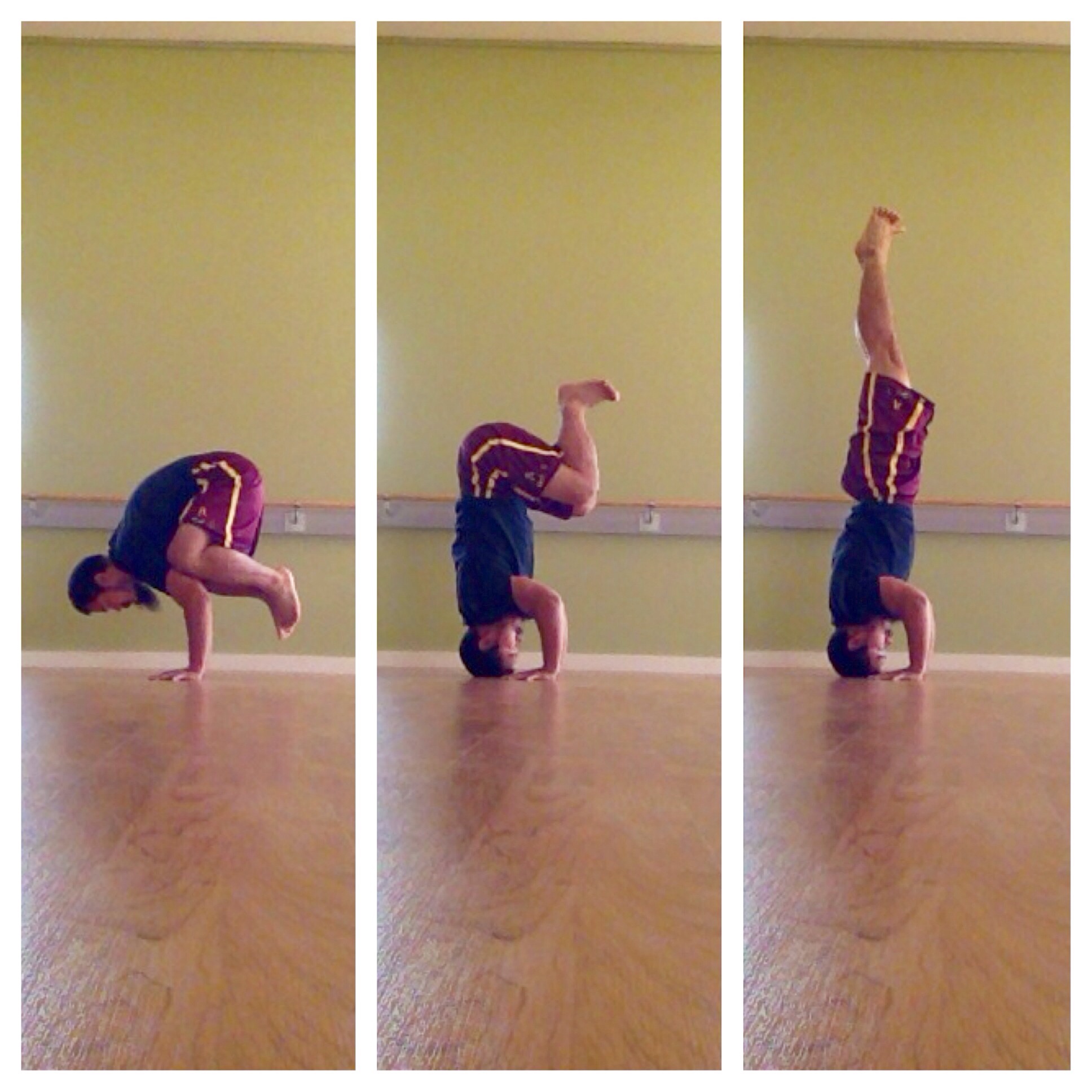
    This is not a knock on things like Sirsasana (Headstand) or lightly flowing through a Tai Chi set.

    The same attention to detail, the mindfulness and Presence, can be exercised in these ways too. It’s just that our achievement-oriented Minds often believe that progress is only measured by accomplishing a more difficult posture or learning the next sequence of forms.

    I am fond of suggesting that if you’re bored, then you’re boring.

    If you’ve run out of things to discover in Tadasana or the commencement form in Tai Chi, then you’ve probably actually stopped paying enough attention.

    I’m not sure if it’s Restlessness or Entitlement-Culture, but many of us, myself included, are so busy striving and believing that we are ready for The Next Big Thing that we miss the Beauty of more simple achievements.

  • Yoga is a non-Doing

    What is Yoga?

    The very Existence of the Mind and Body is a manifestation of Yoga.

    Before there was Jon Doe, there was Yoga.

    What is happening just below the surface of your Awareness? What do you see when you peek beneath your sense of “I” or “Me”? Yoga is what we find there. The True Self (Atman) is this Yoga. You Are It.

    Practice.

    The Eight-Limbed Path of Yoga helps us to See this Yoga.

    As we become more skillful at achieving Stillness, as we develop the skill of non-Doing, we can more clearly See this Yoga both on and off the mat.

    Relax is an Active.

    Relax does not mean turn off your Body. Most People do not want that!

    Relax means to not strain. Continue to do whatever you intend to do, but don’t create fake work. If Work is required, we do it, but we keep it in perspective. If you hope to do a handstand, hard work may be required, but there is no need to rush or run yourself ragged. Do a little bit Today, and try again tomorrow too.

    and Remember, even at Rest, there is much going on. The Body is always working. In Yoga Practice we are learning to let the Body do its work, and to help it run efficiently throughout all of our various activities.

  • Back to Basics

    The Thinker in me loves splitting all the hairs it can. The Details often reveal distinct characteristics and qualities of Things.

    In a sea of different styles of Yoga and TaiChi it is helpful to remember that all of these experiences have common ground.

    Literally thousands of variations on the numerous yogAsana and yet the Actions which create these postures and movements are all bound by the laws of Physics.

    Mechanically speaking, we make use of relatively few types of Action.

    There are so many ways to stand on one leg, but every single one of them requires us to stand on one leg.

    Acknowledging this coherence can help us simplify our Practice so that we don’t lose sight of what’s really going on.

    Even the most complex pose is merely a matter of mastering a few key Actions…
    and Practice!

    IMG_0838.JPG
  • Remember

    There is no standard.

    Do as much as you can.

    Do as much as you want.

    Do as much as feels right in that Moment.

    Even the most acrobatic yogi on Earth may just lay on the mat some days.

    Have goals, but let go of Expectations. We come to the mat to take the small steps. The giant leaps are actually little surprises that often show up when we least expect them.

    If a certain posture or physical achievement is your goal, Practice with all due diligence.

    If your goals are not so physically inclined, Practice with no less Intention, but know that, of course, your work may look a little different than the Athlete or Dancer.

    Our Practice is inherently unique based on our own objectives and experiences, but what we all share when we roll out the mat is Being, Here, Now, with The Breath.

  • Why Asana?

    Asana is the aspect of yoga which encourages the development of a “steady comfortable posture.”

    The physical part of yoga is very clearly expressed in this aspect. Posture implies our physical structure, but also implies our capacity to be aware of it and to influence it.

    While many of the more impressive postures and sequences do require great strength and flexibility and focus, these very qualities are cultivated in the more simple postures.

    The Basics are always important.

    If we hope to achieve or accomplish a physical Practice full of flourish and grace and power and strength, we must be willing to find the true Asana in the simple postures.

    To Stand.

    Just this.

    Steady, and unmoved by the “modifications of the MindStuff.”

    Comfortable, at ease and not striving to Be, simply allowing for it.

    Discover the joy in the simple postures. Steady and Comfortable can come off of the mat with you. Relax. Often.

    If you value the ability to demonstrate or conquer the more complex physical postures, then Practice is exactly what it takes and there will be times when great effort may be necessary.

    Diligent, dutiful Hard Work with the physical Practice is precisely what many of the people who seem to do yoga with ease have experienced.

    Yet, it must be remembered that those specific postures are not the primary goal. They are roadside attractions. The hard work of the physical practice is not the true aim either; merely the road.

    The destination, the aim of Asana; is to find a feeling of Ease and Stability, wherever we decide to go.

    Even with simple postures we can promote skillful communication between the Mind and Body. This is the core of the physical skill of Yoga.