It demands that we revisit
and fully imbibe
things we'd rather ignore or brush aside.
All of the patchwork we've built up
in the name of survival and getting-on
has to be torn down.
The wounds require exposure to the air
in order to be resolved.
Most of us slap a bandage over the wound,
protecting it,
which is, for a while,
both practical and correct.

But rather than enduring the minor pain
of the adhesive tugging at our skin
as the bandage is removed,
and risk the wound being exposed,
we choose to slap another bandage on top.
Many of us have built up cathedrals of such bandages.
We build altars of our refusal to heal,
and create elaborate and ornate avoidance-rituals.
And every time we have the opportunity
to dig into the hurt
toward healing,
we opt instead to apply yet another bandage.

Until we are willing to rip off these bandages,
the wound can never be addressed.
It will hurt a little bit,
every single time
we rip one of these bandages away.
And if we've been applying them for many years,
it may entail round after round of discomfort
to reach the original bandage covering the wound.
Healing hurts,
which is precisely why we Humans
often prefer to avoid it.
Tag: wellness
-
Healing Hurts
-
“Chathuranga,” Chips and Salsa…
Chathuranga Dandasana (Four-Limbed Stick Pose?!)- a staple of American Yoga.
In vinyasa classes all across the country, countless iterations of “high to low plank” are unfolding. In general, this is probably great news. However, there are surely some statistics to demonstrate at least some kind of measurable effect from all of these repetitions.
According to the ____, and certainly by my accounts as well, all this “Chathuranga” business is causing some injuries among the growing number of Americans attending yoga classes. Repetitive movements and stress on troublesome joints seem to be the most common culprits cited by the ____ percent of people who report having been injured as a result of their yoga practice.
While some people (high Pitta, anyone!?) truly thrive on the ecstatic and empowering action of holding (as well as flowing to, or through,) Chathuranga Dandasana, many Bodies simply don’t need that type of work. Indeed for those among the statistic, it has ultimately proven harmful.
Sometimes we allow the will of the Sangha to string us along. There are certainly instances when it helps to utilize that group energy to inspire and motivate our practice, but it’s useful to remember that Practice is about opportunity rather than obligation.
The “Chathuranga” flow in vinyasa class reminds me of the bottomless baskets of chips and salsa you sometimes get at a Mexican restaurant. You can eat to your Heart’s content, yet still more and more will keep coming. If you have a delicious entree in the kitchen though, you might not want to fill up on just chips and salsa.
I often find that during power-flow classes, even something basic such as a Corepower C1 class, I will politely decline some of the early refill offers on my chip-basket.
As I’m eating the main course, however, I will delightedly dip several chips at once and savor the crunch and the spice (if the salsa is sufficiently bold, that is!).
The unlimited-chips offer isn’t going to be rescinded if we don’t eat enough chips.
It isn’t a limited-time offer.
Chathuranga Dandasana isn’t going to vanish from Reality just because we decide to not play it on a loop.
Even if we’ve been modifying to the most gentle variation we can find, it’s fine to let a “Chathuranga” pass by; it might even feel sublime and divine.
If only once-in-a-while, enjoy the act of not-pushing, of not-racing.
When you partake of the Chathuranga Dandasana, be fully present and committed to it. If we’re careless with alignment and technique, it’s just as well to lay off.
Chathuranga on purpose, with Intention.
Or skip it, with that same purpose and Intention.
It comes back to the familiar refrain we’ve all heard, and many of us have said- “listen to your Body.”
When the Body is not craving chips, don’t eat chips. If the crunch of those tasty triangles is calling, then eat ’em all up!
-
Meditation
In meeting with several teachers and associates today, the topic of Meditation came up.
Recently, Meditation has also been mentioned more often on SocialMedia and in other arenas of dialogue. Of course, this includes the voice of non-meditators, some of whom feel a sense of peer-pressure (if not the pressure of pure smugness and superiority) from the pro-Meditation crowd.
Today’s conversations helped me appreciate the diverse possible approaches to Meditation. Certain systems of Meditation exist with specific instructions and time-tested methods. Some traditions and lineages of Yoga are examples of this, though Modernity has also spurred a large blurring of lines and borders between different traditions.
In any case, if we were to avoid asking the adherents or advocates of a particular system or brand of Meditation, we would find that Meditation itself can be practiced and applied (or at the very least, conceived of) in many ways.
There are Buddhist perspectives that suggest manual labor to be among the best of Meditations.
Many Yoga classes invite us to use Savasana as a Meditation.
TaiChi CHuan is often marketed as a “moving meditation”.
These are all active attempts or efforts at Meditation;
what of the inadvertent or unassuming Meditations?
Riding a bicycle down a smooth road on a sunny day. Fishing a lazy stream in the late afternoon. Lounging, legs-up, on the sofa as gentle breezes whisper in the branches outside the window.
Meditation might be more properly thought of as an Experience.
Any Experience during which we are wholly (or transcendentally, to look at it from the other side of the coin) engaged, fully attuned, whether by way of keen mental-acuity, or that broader body-based proprioceptive perspective, being truly In-The-Moment is the bottom-line of Meditation.
Surely an exception to the Rule might exist, but I believe Everybody pursues Meditation, whether they realize it or not.
A Runner’s High. The first bite of a sumptuous meal. A job well-done.
Meditation, in it’s truest form, is something that happens without our recognition more often than not.
See if you can catch yourself meditating from time to time. The people who claim to not want anything to do with Meditation might find that they already DO meditate, and perhaps more often than many people who have bumper-stickers declaring their Practice.
Meditation as a Practice in and of itself is certainly not Everybody’s cup of tea.
Meditation as a general category of States-of-Being, however, is something inherent to the Human condition. It is simply a part of our Natural Experience.
-
Nurture Your Nature
This is the principle I strive to convey in the class setting.
The Listening skill, being able to understand the Language of the Body, is the only way we can stay up to date with what we need in our Practice.
The changing factors of our World impact us all in different ways. A hot summer day is the right time to play; fun in the sun, for some of us. Some of us find that a hot day is an indoor-holiday, or sends us looking for shade!
The literal fact of the “Matter” of each individual Body suggests certain responses to various stimuli.
Heat can feel refreshing and energizing to some, and oppressive and exhausting to others.
Likewise, it is, with the many manifestations of Asana Yoga. Let each session on the mat reflect what your Body is needing in that moment.
Cherry-pick the nine postures you truly need and use them to the fullest. Take Time to hone and stregnthen your Nature, but be sure to grow with Balance and Grace.
Take the Time to reveal your limits to yourself. Know where the line is without attatchment to the implications of what that means. It means nothing until you give it meaning.
If a pose happens, it happens. If it doesn’t, then it doesn’t. This instance has no bearing on tomorrow’s attempt until you define that influence.
Try it once more quick just in case, then try again tomorrow. Modify the pose and take a stepping-stone toward the pose if you want to make it happen.
Or let go of the notion and work on what you do want to make happen.
Choice is there.
Knowing your Doshas can help support your efforts on the mat. Knowing your unique constitution, or Prakrti, brings valuable depth to your Practice.
-
If You’re Bored, You’re Boring
One of the best things about both Tai Chi and Yoga is that no matter how long you Practice, no matter how skillful you are with the postures or movements or principles, you never truly outgrow the Basics.
This is precisely what attracted me to these disciplines.
There is no Finish Line.
My Tai Chi practice as of late has been simplified to just the first few moves of the Sun 41 set. The more attention we pay to the Internal aspects, the less need we find for dozens of postures.
This is not a knock on things like Sirsasana (Headstand) or lightly flowing through a Tai Chi set.
The same attention to detail, the mindfulness and Presence, can be exercised in these ways too. It’s just that our achievement-oriented Minds often believe that progress is only measured by accomplishing a more difficult posture or learning the next sequence of forms.
I am fond of suggesting that if you’re bored, then you’re boring.
If you’ve run out of things to discover in Tadasana or the commencement form in Tai Chi, then you’ve probably actually stopped paying enough attention.
I’m not sure if it’s Restlessness or Entitlement-Culture, but many of us, myself included, are so busy striving and believing that we are ready for The Next Big Thing that we miss the Beauty of more simple achievements.
-
Yoga is a non-Doing
What is Yoga?
The very Existence of the Mind and Body is a manifestation of Yoga.
Before there was Jon Doe, there was Yoga.
What is happening just below the surface of your Awareness? What do you see when you peek beneath your sense of “I” or “Me”? Yoga is what we find there. The True Self (Atman) is this Yoga. You Are It.
Practice.
The Eight-Limbed Path of Yoga helps us to See this Yoga.
As we become more skillful at achieving Stillness, as we develop the skill of non-Doing, we can more clearly See this Yoga both on and off the mat.
Relax is an Active.
Relax does not mean turn off your Body. Most People do not want that!
Relax means to not strain. Continue to do whatever you intend to do, but don’t create fake work. If Work is required, we do it, but we keep it in perspective. If you hope to do a handstand, hard work may be required, but there is no need to rush or run yourself ragged. Do a little bit Today, and try again tomorrow too.
and Remember, even at Rest, there is much going on. The Body is always working. In Yoga Practice we are learning to let the Body do its work, and to help it run efficiently throughout all of our various activities.
-
Back to Basics
The Thinker in me loves splitting all the hairs it can. The Details often reveal distinct characteristics and qualities of Things.
In a sea of different styles of Yoga and TaiChi it is helpful to remember that all of these experiences have common ground.
Literally thousands of variations on the numerous yogAsana and yet the Actions which create these postures and movements are all bound by the laws of Physics.
Mechanically speaking, we make use of relatively few types of Action.
There are so many ways to stand on one leg, but every single one of them requires us to stand on one leg.
Acknowledging this coherence can help us simplify our Practice so that we don’t lose sight of what’s really going on.
Even the most complex pose is merely a matter of mastering a few key Actions…
and Practice!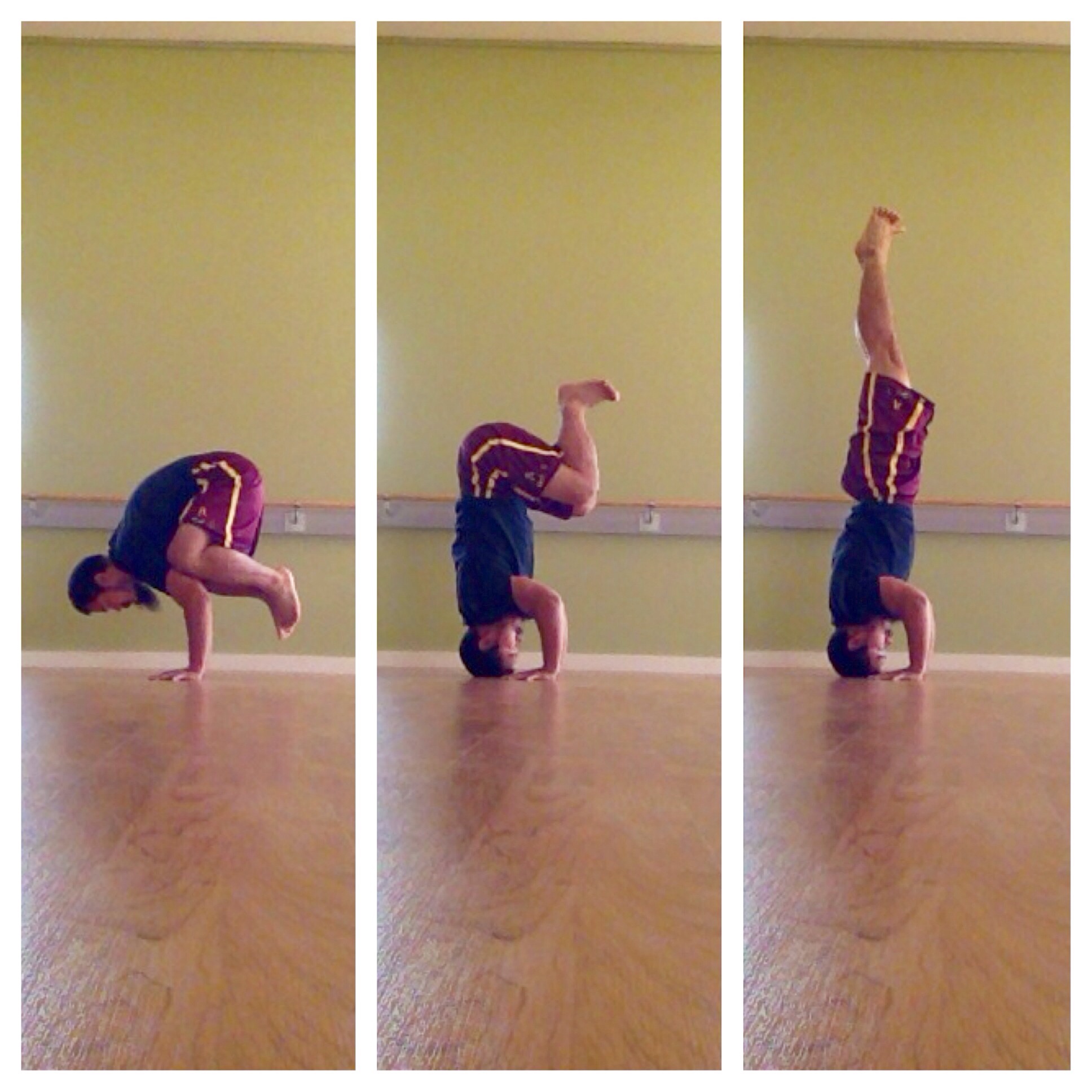
-
An Apple A Day (Or, What Did You Do To Promote Your Own Wellness Today)
I visited with a chiropractor today and we discussed a great many things, but what stuck out the most was a simple distinction between two modes of action.
Many of us operate from a Reactive mindset. If there is an ache, we take a pill. We are always responding to circumstances.
What is lacking for the majority of the population is the Proactive attitude. Rather than merely responding to circumstances, how can we create them?
Even small and seemingly inconsequential habits have a dramatic impact on our overall condition.
When our habits are not Wellness promoting, we slowly (or rapidly) fall out of balance.
When our habits are healthful, we often don’t feel drastically different, which makes it hard to stay on track. There is no spectacle, parade, or festival.
When it comes to the Human Body however, No News is often Good News.
All the effort that goes into maintenance and upkeep can feel like a wash, and it is still no guarantee that things won’t break down, but when we are Proactive about well-being we find that the Reactive tactics become less necessary.
And although it may not feel like much, the little steps we do take often mean much more than we realize.
 Yin-Yang-Yoga