Tag: yogasana

  • No Failure, Only Feedback

    Toppling out of a challenging Yoga posture is important, because our reaction is the true substance of the Practice.

    The posture is just a petri dish to observe yourself in.

    When you fall out, how do you respond?

    Some of us get angry. Some of us feel defeated. There is frustration. Sometimes there is a feeling of despair or disgust. Ever get envious or competitive after flailing out of a posture?

    Notice your reaction and then get back in the posture, but do so more attentively.

    Be aware of what you can do differently each time; focus on a single, clear objective with every attempt.

    The ability to perceive subtle information from your Body, and to command the Body with the Mind and Breath, is the greatest benefit of the physical Practice of Yoga.

    Stay focused on listening more intently and being more present with every moment of your experience in-to, and out-of, postures.

    With this mindset there is only feedback about the posture and yourself in a given moment. There is no such thing as failure when you are only exploring.

    The only failure is to stop exploring.

  • “Chathuranga,” Chips and Salsa…

    Chathuranga Dandasana (Four-Limbed Stick Pose?!)- a staple of American Yoga.

    In vinyasa classes all across the country, countless iterations of “high to low plank” are unfolding. In general, this is probably great news. However, there are surely some statistics to demonstrate at least some kind of measurable effect from all of these repetitions.

    According to the ____, and certainly by my accounts as well, all this “Chathuranga” business is causing some injuries among the growing number of Americans attending yoga classes. Repetitive movements and stress on troublesome joints seem to be the most common culprits cited by the ____ percent of people who report having been injured as a result of their yoga practice.

    While some people (high Pitta, anyone!?) truly thrive on the ecstatic and empowering action of holding (as well as flowing to, or through,) Chathuranga Dandasana, many Bodies simply don’t need that type of work. Indeed for those among the statistic, it has ultimately proven harmful.

    Sometimes we allow the will of the Sangha to string us along. There are certainly instances when it helps to utilize that group energy to inspire and motivate our practice, but it’s useful to remember that Practice is about opportunity rather than obligation.

    The “Chathuranga” flow in vinyasa class reminds me of the bottomless baskets of chips and salsa you sometimes get at a Mexican restaurant. You can eat to your Heart’s content, yet still more and more will keep coming. If you have a delicious entree in the kitchen though, you might not want to fill up on just chips and salsa.

    I often find that during power-flow classes, even something basic such as a Corepower C1 class, I will politely decline some of the early refill offers on my chip-basket.

    As I’m eating the main course, however, I will delightedly dip several chips at once and savor the crunch and the spice (if the salsa is sufficiently bold, that is!).

    The unlimited-chips offer isn’t going to be rescinded if we don’t eat enough chips.

    It isn’t a limited-time offer.

    Chathuranga Dandasana isn’t going to vanish from Reality just because we decide to not play it on a loop.

    Even if we’ve been modifying to the most gentle variation we can find, it’s fine to let a “Chathuranga” pass by; it might even feel sublime and divine.

    If only once-in-a-while, enjoy the act of not-pushing, of not-racing.

    When you partake of the Chathuranga Dandasana, be fully present and committed to it. If we’re careless with alignment and technique, it’s just as well to lay off.

    Chathuranga on purpose, with Intention.

    Or skip it, with that same purpose and Intention.

    It comes back to the familiar refrain we’ve all heard, and many of us have said- “listen to your Body.”

    When the Body is not craving chips, don’t eat chips. If the crunch of those tasty triangles is calling, then eat ’em all up!
  • Nurture Your Nature

    This is the principle I strive to convey in the class setting. 

    The Listening skill, being able to understand the Language of the Body, is the only way we can stay up to date with what we need in our Practice.

    The changing factors of our World impact us all in different ways. A hot summer day is the right time to play; fun in the sun, for some of us. Some of us find that a hot day is an indoor-holiday, or sends us looking for shade!

    The literal fact of the “Matter” of each individual Body suggests certain responses to various stimuli.

    Heat can feel refreshing and energizing to some, and oppressive and exhausting to others. 

    Likewise, it is, with the many manifestations of Asana Yoga. Let each session on the mat reflect what your Body is needing in that moment. 

    Cherry-pick the nine postures you truly need and use them to the fullest. Take Time to hone and stregnthen your Nature, but be sure to grow with Balance and Grace. 

    Take the Time to reveal your limits to yourself. Know where the line is without attatchment to the implications of what that means. It means nothing until you give it meaning. 

    If a pose happens, it happens. If it doesn’t, then it doesn’t. This instance has no bearing on tomorrow’s attempt until you define that influence. 

    Try it once more quick just in case, then try again tomorrow. Modify the pose and take a stepping-stone toward the pose if you want to make it happen.

    Or let go of the notion and work on what you do want to make happen. 

    Choice is there.

    Knowing your Doshas can help support your efforts on the mat. Knowing your unique constitution, or Prakrti, brings valuable depth to your Practice.

  • If You’re Bored, You’re Boring

    One of the best things about both Tai Chi and Yoga is that no matter how long you Practice, no matter how skillful you are with the postures or movements or principles, you never truly outgrow the Basics.

    This is precisely what attracted me to these disciplines.

    There is no Finish Line.

    My Tai Chi practice as of late has been simplified to just the first few moves of the Sun 41 set. The more attention we pay to the Internal aspects, the less need we find for dozens of postures.

    This is not a knock on things like Sirsasana (Headstand) or lightly flowing through a Tai Chi set.

    The same attention to detail, the mindfulness and Presence, can be exercised in these ways too. It’s just that our achievement-oriented Minds often believe that progress is only measured by accomplishing a more difficult posture or learning the next sequence of forms.

    I am fond of suggesting that if you’re bored, then you’re boring.

    If you’ve run out of things to discover in Tadasana or the commencement form in Tai Chi, then you’ve probably actually stopped paying enough attention.

    I’m not sure if it’s Restlessness or Entitlement-Culture, but many of us, myself included, are so busy striving and believing that we are ready for The Next Big Thing that we miss the Beauty of more simple achievements.

  • Yoga is a non-Doing

    What is Yoga?

    The very Existence of the Mind and Body is a manifestation of Yoga.

    Before there was Jon Doe, there was Yoga.

    What is happening just below the surface of your Awareness? What do you see when you peek beneath your sense of “I” or “Me”? Yoga is what we find there. The True Self (Atman) is this Yoga. You Are It.

    Practice.

    The Eight-Limbed Path of Yoga helps us to See this Yoga.

    As we become more skillful at achieving Stillness, as we develop the skill of non-Doing, we can more clearly See this Yoga both on and off the mat.

    Relax is an Active.

    Relax does not mean turn off your Body. Most People do not want that!

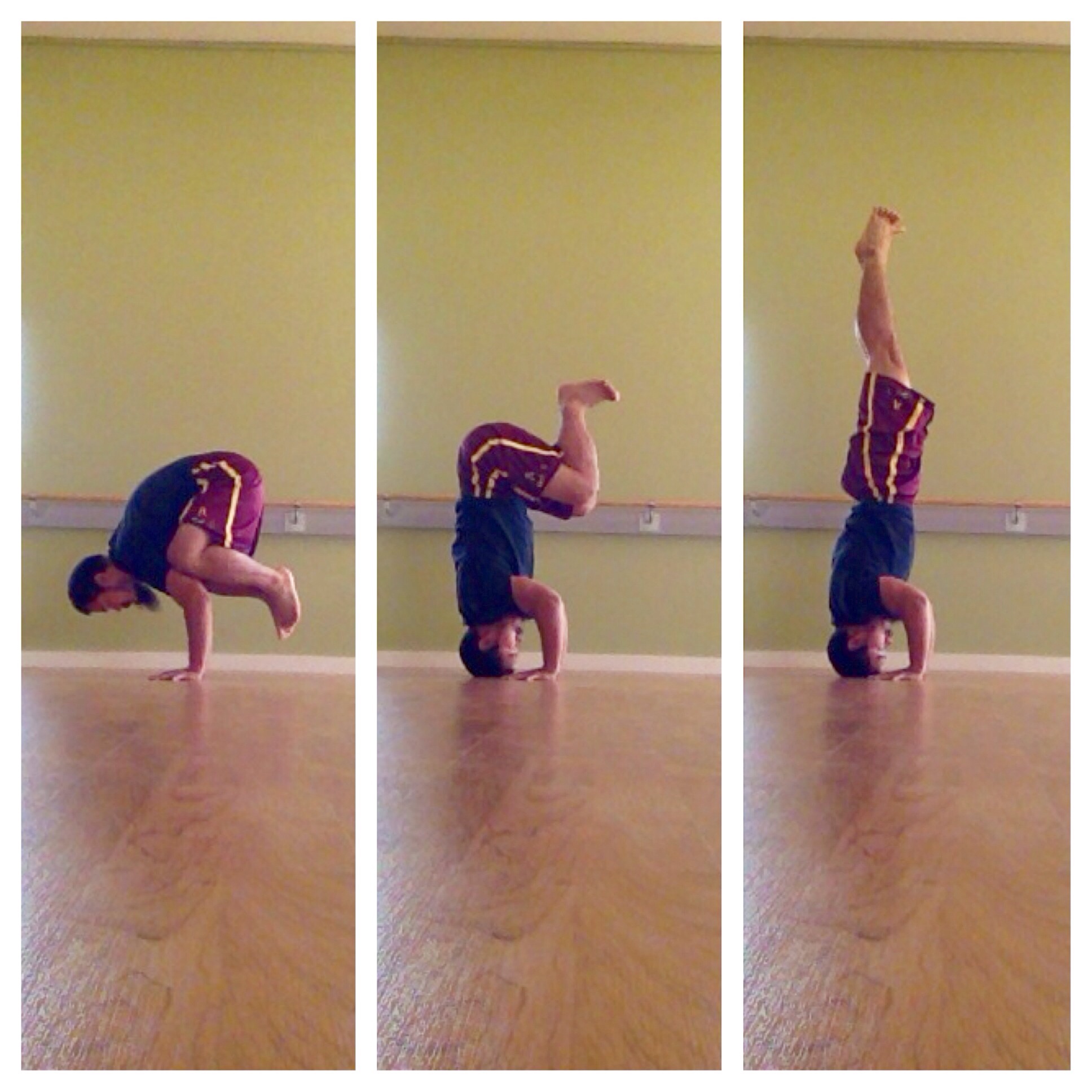
    Relax means to not strain. Continue to do whatever you intend to do, but don’t create fake work. If Work is required, we do it, but we keep it in perspective. If you hope to do a handstand, hard work may be required, but there is no need to rush or run yourself ragged. Do a little bit Today, and try again tomorrow too.

    and Remember, even at Rest, there is much going on. The Body is always working. In Yoga Practice we are learning to let the Body do its work, and to help it run efficiently throughout all of our various activities.

  • Back to Basics

    The Thinker in me loves splitting all the hairs it can. The Details often reveal distinct characteristics and qualities of Things.

    In a sea of different styles of Yoga and TaiChi it is helpful to remember that all of these experiences have common ground.

    Literally thousands of variations on the numerous yogAsana and yet the Actions which create these postures and movements are all bound by the laws of Physics.

    Mechanically speaking, we make use of relatively few types of Action.

    There are so many ways to stand on one leg, but every single one of them requires us to stand on one leg.

    Acknowledging this coherence can help us simplify our Practice so that we don’t lose sight of what’s really going on.

    Even the most complex pose is merely a matter of mastering a few key Actions…
    and Practice!

    IMG_0838.JPG
  • Remember

    There is no standard.

    Do as much as you can.

    Do as much as you want.

    Do as much as feels right in that Moment.

    Even the most acrobatic yogi on Earth may just lay on the mat some days.

    Have goals, but let go of Expectations. We come to the mat to take the small steps. The giant leaps are actually little surprises that often show up when we least expect them.

    If a certain posture or physical achievement is your goal, Practice with all due diligence.

    If your goals are not so physically inclined, Practice with no less Intention, but know that, of course, your work may look a little different than the Athlete or Dancer.

    Our Practice is inherently unique based on our own objectives and experiences, but what we all share when we roll out the mat is Being, Here, Now, with The Breath.

  • Why Asana?

    Asana is the aspect of yoga which encourages the development of a “steady comfortable posture.”

    The physical part of yoga is very clearly expressed in this aspect. Posture implies our physical structure, but also implies our capacity to be aware of it and to influence it.

    While many of the more impressive postures and sequences do require great strength and flexibility and focus, these very qualities are cultivated in the more simple postures.

    The Basics are always important.

    If we hope to achieve or accomplish a physical Practice full of flourish and grace and power and strength, we must be willing to find the true Asana in the simple postures.

    To Stand.

    Just this.

    Steady, and unmoved by the “modifications of the MindStuff.”

    Comfortable, at ease and not striving to Be, simply allowing for it.

    Discover the joy in the simple postures. Steady and Comfortable can come off of the mat with you. Relax. Often.

    If you value the ability to demonstrate or conquer the more complex physical postures, then Practice is exactly what it takes and there will be times when great effort may be necessary.

    Diligent, dutiful Hard Work with the physical Practice is precisely what many of the people who seem to do yoga with ease have experienced.

    Yet, it must be remembered that those specific postures are not the primary goal. They are roadside attractions. The hard work of the physical practice is not the true aim either; merely the road.

    The destination, the aim of Asana; is to find a feeling of Ease and Stability, wherever we decide to go.

    Even with simple postures we can promote skillful communication between the Mind and Body. This is the core of the physical skill of Yoga.